
What Finally Made My ADHD Morning Routine Stick

Introduction
An ADHD morning routine can transform your entire day—but only if it fits how your brain actually works. It’s not about waking at 5 a.m. or meditating for 30 minutes (unless that works for you). It’s about designing a flow that keeps things simple, predictable, and low-pressure.
I’ve tried and failed at plenty of “miracle mornings.” Spoiler: most made me more anxious. But after years of trial (and a lot of burned toast), I finally landed on morning systems that actually help me start my day without spiraling.
Whether you’re a fellow ADHDer or suspect you might be, here you’ll find realistic tips, tested strategies, and gentle inspiration to help craft a morning that fits your life. Let’s make those chaotic wake-ups a little less “aaah!” and a lot more “ahhh.”
Creating a sustainable ADHD morning routine has helped me improve productivity, reduce procrastination, and (maybe most important) feel like I’m not behind every single day.
Practical tips & fresh ideas
- Start your day the night before. Seriously—morning You needs evening You to be a hero. Lay out clothes (yes, even if you work from home), prep breakfast basics, and draft a micro to-do list. This helps reduce decision fatigue, which can send our brains into a tailspin before 9 a.m. According to the American Psychological Association, visual cues and predictable routines help ADHDers feel more grounded. So I keep sticky notes by the coffee machine saying “take your meds” and “open the curtains.” Bright and brain-proof.
- Create a micro-routine—not a rigid schedule. Routines are about flow, not perfection. Mine is: bathroom, meds, light snack, coffee, move body, open laptop. If I mess up the order, no big deal. But having a general rhythm trains my brain to transition easier. Think of it less like “start at 7:00 a.m.” and more like “here’s what happens after I open my eyes.” This approach lowers resistance to starting the day and gives your brain mini wins.
- Add one energizing movement, even for just 5 minutes. ADHDers often have sluggish mornings, especially if sleep was weird (which, let’s be honest—it usually is). A short stretch, dancing to a ridiculous playlist, or pacing while drinking water can do wonders. According to the Mayo Clinic, light physical activity can improve focus and mood in people with ADHD. No one’s asking you to do a 45-minute HIIT—you’re just inviting some brain fuel in.
- Use a sensory cue to spark action. For me, it’s the smell of coffee and the sound of a specific playlist. Brains with ADHD often struggle with transitions—going from sleep to action feels like ice-cold plunge. But consistent sensory cues can bridge that gap. Think: essential oils, lighting a candle, or switching from pajamas to “house pants.” These quiet signals help shift gears when internal motivation is buried under blankets of snooze cycles.
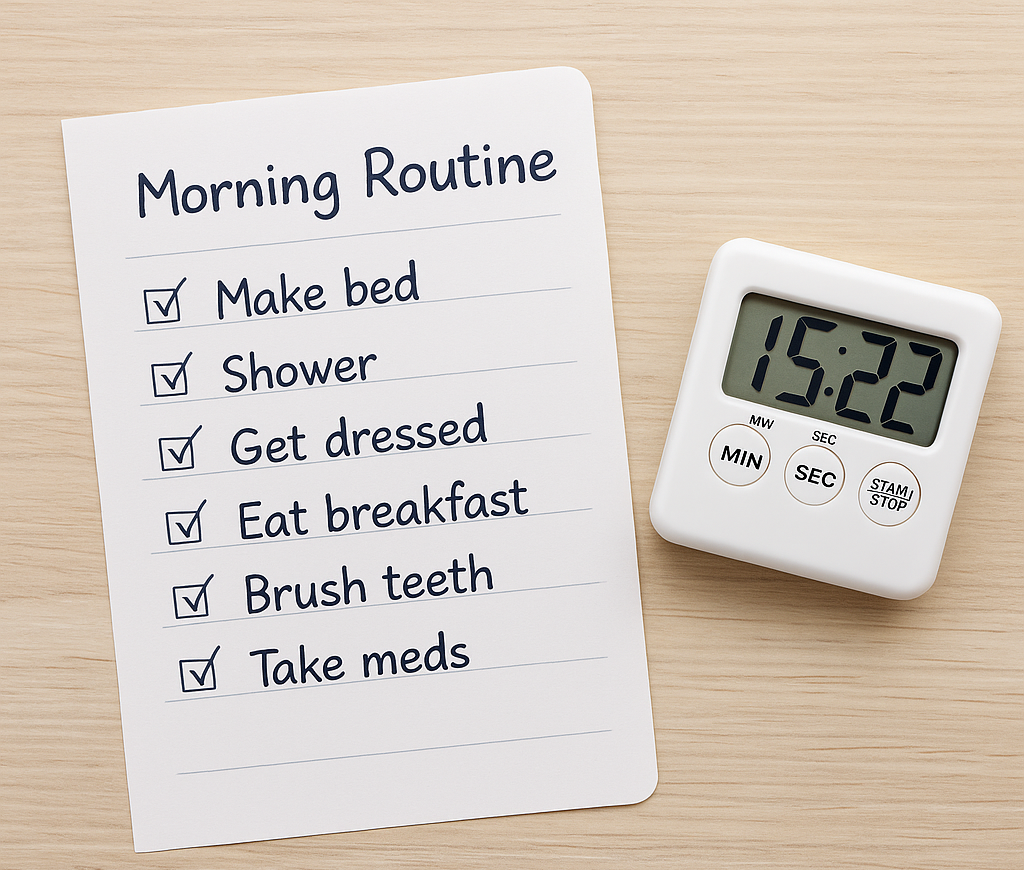
- Time blindness is real—so use tools that don’t shame. I use a visual timer that looks like a pie slicing down (so satisfying), and Alexa shouts at me when it’s 9:00. But I try to keep it supportive, not alarmist. If I run late, I don’t spiral—I shift. ADHD mornings rarely go exactly as planned. Compassion (with a side of alarms) wins every time.
- Give yourself “buffer tasks.” These are low-stakes rituals that make mornings softer. I wipe my counters, feed the cats, and play a podcast—none of which require brainpower. It’s like warming the engine on cold days. The National Institute of Mental Health says predictable routines help reduce overwhelm in ADHD brains. So your buffer tasks can act as grounding anchors before jumping into high-stakes demands.
- Use visual prompts and trackers. Out of sight = out of mind is painfully real with ADHD. I keep a dry erase board on my fridge with five icons: meds, hydrate, protein, stretch, dress. Checked off = dopamine reward. Make it cute, colorful, and visible. You’re not lazy—you just need external systems your brain can see.
Timeless ideas & inspiration
Build transition time into your morning
If I plan to be “productive” the moment I wake up, I fail. Our brains need time to ramp. Five to ten minutes of soft transition—like looking out the window or scrolling intentionally—can make a big difference. I keep a boring playlist that signals “ease into day mode.” Not a war drum, just background gentle vibes. Think lo-fi beats and breathing, not motivational speeches. Give your brain space to catch up with your body.
Rotate your routines monthly
Boredom = death sentence for ADHD habits. I stopped expecting a single perfect morning routine to last forever. Every month or so, I rotate elements: new breakfast, new Spotify playlist, rearranged workspace. It refreshes routines without scrapping them. Call it Morning Routine 2.0. Or version 43.5 if you’re like me. Novelty wakes up the brain—embrace it. As long as the bones of your system stay consistent, the design can flex.
Keep breakfast stupid-simple
If it’s not grab-and-go, I’m probably skipping it. I batch protein muffins on Sunday, keep boiled eggs in the fridge, and stack protein bars by the kettle. ADHD me cannot chop an avocado at 7:31 a.m. But I can peel a clementine and dunk it in yogurt. Eating something with protein stabilizes energy—and reduces that mid-morning crash that screams “FOCUS NOW” into the void.
Celebrate micro-wins
Took your meds? Gold star. Got dressed before noon? That’s a win. ADHD makes adulting a full-contact sport. So I bake in little celebrations throughout the morning. A sticker. A funny meme saved for after brushing teeth. The small stuff builds momentum. When you show yourself kindness for completing “basic” tasks, you’re rewiring inner narratives. That’s powerful stuff, my friend.
Don’t schedule early decisions
Problem solving before coffee = chaos. I schedule all important decisions for after 10 a.m. (unless the decision is pancakes or waffles). Morning time is for known moves. Trying to pick outfits, meals, or priorities right after waking can spike cortisol. Keep decisions pre-made: capsule wardrobe, batch-cooked meals, auto-assigned tasks. Spare your brain the fog wrestling match before it’s fully online.
Let light in—literally
I open curtains before coffee. It’s the first thing I do, even before brushing my hair. Natural light signals my brain: hey, it’s daytime, wake up now. According to NIMH, regulating sleep-wake cycles can improve daily functioning in ADHD. Daylight helps reset circadian rhythms disrupted by irregular sleep (guilty). Cheaper than a sunrise alarm clock—and cat-approved.
Stack the routine with stuff you enjoy
Too often, ADHD morning routines feel like a checklist of chores. But you’re allowed to like your mornings. I pair coffee with my favorite podcast or a cozy hoodie. These dopamine boosts make the less-fun stuff (like putting on pants) more bearable. Motivation doesn’t show up for free—we trick it with tiny pleasures. Build reward loops into your flow. Make your routine not suck. Radical, I know.
FAQ
There’s no universal answer—it depends on your sleep patterns and obligations. Aim for consistency over earliness. Studies show ADHD sleep cycles skew later, so waking at 5 a.m. might backfire. If you’re getting 7–9 hours, you’re doing great. Try to wake up at the same time daily—even on weekends—to help regulate your circadian rhythm.
Associate meds with a habit you already do—like brushing teeth or making coffee. Use visual cues, reminders, or dispensers placed near that trigger. Some people set phone alarms or use sticky notes near the kettle. Eventually, it becomes automatic through repetition. Pairing behavior + cue = ADHD win.
Absolutely. Flexibility is part of success. Rigid routines often fail when ADHD resistance kicks in. Focus more on consistent patterns than perfect execution. If you miss a step, start again mid-routine. A partially done routine is still helpful.
Yes, for many people. ADHD can come with sleep issues, time blindness, and difficulty transitioning into tasks. That can make mornings feel overwhelming or disjointed. But supportive routines, visual cues, and sensory rituals can ease the chaos.
Yes, for many people. Stimulant medications often help with focus and initiation. But always consult your healthcare provider before starting, stopping, or changing any medication. What works varies widely person to person.
Try waking up just 15–20 minutes earlier—not a full hour—and adding one buffer task. Prepping the night before also helps. If possible, reduce morning demands by shifting tasks to later in the day. The goal isn’t early—it’s calm.
Anywhere from 20–60 minutes, depending on your lifestyle. Focus on flow rather than duration. A 30-minute routine that feels grounding is more useful than a two-hour one you dread. Let your needs guide the timeline.
Nope. That advice doesn’t fit every brain or body. Night owls with ADHD often function best with later starts. Prioritize rest and consistency over trendy wake-up hacks. Win the morning your own way—even if that morning starts at 9:30.
Conclusion
Your ADHD morning routine doesn’t need to be perfect—it just needs to be helpful enough to reduce chaos and increase calm. Tiny tweaks matter more than big overhauls. Whether it’s putting meds by the coffee maker or dancing while brushing your teeth, you’re building a system that supports your unique wiring.
A good morning doesn’t start with discipline. It starts with understanding. Understanding that we need buffer zones, visual cues, body movement, and a bit of dopamine. You deserve a morning that doesn’t feel like a race you’re already losing.
Try one thing from this article. Just one. See how it feels. Then build from there. Your version of “routine” might not feel structured to others—but if it works for your brain, that’s all that counts.
If this helped, pass it along. Save it. Share it. Pin it. Let’s support each other in building mornings that don’t suck—for ADHD brains and beyond.
Grab the ADHD Morning Routine Checklist
Make mornings calmer with a one-page, brain-friendly checklist you can stick on the fridge. Print it or use it on your phone.
You’ll get the password by email • No spam