
ADHD Time Boxing vs Time Blocking: What Actually Works?

Introduction
The difference between ADHD time boxing vs time blocking is subtle but crucial. Time blocking divides your day into task blocks, while time boxing sets strict start-and-end times to “contain” a task. Both are forms of time management—but they work very differently for the ADHD brain.
I’ve wrestled with both. Some days my planner looks like a beautiful grid. Other days, it’s just coffee stains and chaos. Sound familiar?
Choosing the right method isn’t about being perfect. It’s about aligning with how your brain actually works—not how productivity books think it should.
Whether you’re constantly jumping between tabs (hi, same) or hyperfocusing until 2 a.m., understanding time boxing and time blocking could help reduce burnout and decision fatigue.
This guide will break down what each method is, how they work with ADHD, and which might work for you. Let’s get into it.
Practical tips & fresh ideas
- If you’re overwhelmed, start tiny. For ADHD brains, even choosing a system can trigger analysis paralysis. Don’t overcommit to a full daily plan right away. Try boxing just one dreaded task (like laundry or responding to that one email). When I did this, I gave myself 20 minutes and played the Rocky theme. It helped more than you’d think. Small wins count—and for us, they’re huge momentum builders.
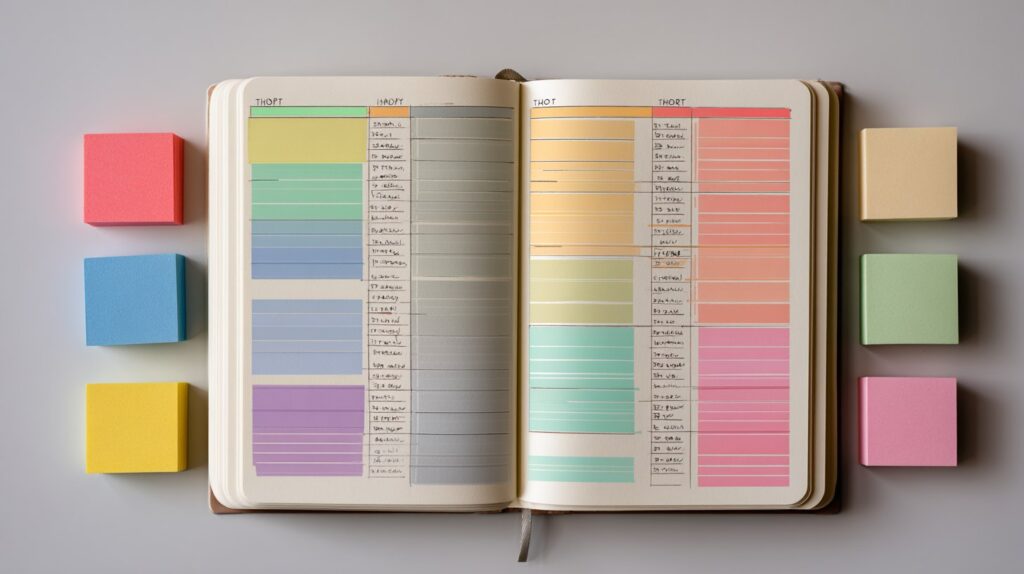
- Use visual time cues. Time boxing becomes more ADHD-friendly when paired with timers, color coding, or alarms. I use a Time Timer for short boxes—seeing time run out helps me stay motivated. According to the APA, externalizing time makes it easier for ADHD individuals to stay on track. Even just changing the background color of each block or using stickers can make a difference.
- Plan your energy, not just your tasks. This one changed my life. Time blocking tends to assume consistent energy all day—which is rarely the case with ADHD. Instead, block tasks that match your natural rhythms. I do creative work in the morning and admin stuff after lunch when my focus dips. According to the Mayo Clinic, energy fluctuations are common in ADHD and should be planned around, not ignored.
- Box tasks you usually avoid. Got that one task you dread so much you pretend it doesn’t exist? Yeah, box it. Give it a 15-minute “containment zone.” No expectations beyond showing up. Many ADHD folks (me included) experience task initiation paralysis, and boxing the time removes the infinite “ugh” cloud. Bonus tip: set a reward afterward—even just TikTok or coffee.
- Reframe blocks as “appointments with yourself.” This helped me stop flaking on myself. When I treated time blocks like doctor appointments instead of optional chores, I showed up more often. Put the block in your calendar, set notifications, and even leave the house if you need a change of environment. This trick works wonders with body doubling, too—especially if you combine it with coworking sessions on Zoom.
- Use post-it previews. When time boxing, I write a quick sticky note outlining what “done” looks like. This helps keep expectations realistic and prevents perfectionism spirals mid-task. ADHD brains often chase closure and clarity, so a visual reminder of what success looks like (even if it’s just “start draft”) keeps procrastination at bay.
- Have a “safety net” block at the end of the day. This one saved my week more than once. Whether you’re time boxing or blocking, leave a final, flexible buffer at the end of your day where anything that overflows can safely land. I usually call it “Rest & Reset.” It keeps things from spiraling when life inevitably doesn’t go to plan. And with ADHD, life rarely goes to plan.
- Review your method weekly, not daily. Don’t judge your success based on a single chaotic Tuesday. Try one method for 5–7 days and note what works and what doesn’t. ADHD often means fluctuating focus, so we need data and compassion. I light a candle, play calming music, and review my planner every Sunday. Turns out the system isn’t the problem—it’s often the unrealistic expectations I pile onto it.
Timeless ideas & inspiration
Understand the ADHD “now or not now” time model
People with ADHD often don’t sense time the way neurotypicals do. There’s “now” and “not now”—that’s it. Time blocking tries to work in advance, but it can clash with this default wiring. Time boxing, on the other hand, creates urgent now-moments in the form of short, timed slots. I find boxing easier when my dopamine is low because it suspends the “I can do it later” loop. Recognizing this cognitive pattern helps you adapt productivity tools—not feel bad when they don’t work perfectly.
Decide based on task type, not day type
Blocking is great when you know exactly what you need to do—like admin days, or batching. Boxing is better when tasks are daunting or unstarted. When my to-do list feels terrifying, I box difficult tasks into short sprints. For repetitive tasks or when I’m in the flow, blocking a few hours at a time works well. No need to be exclusive—you can mix both methods depending on context. The real trick is building emotional momentum, not fitting into a “type.”
Add novelty: themed days or blocks
ADHD thrives on novelty, and traditional time blocking can start to feel like playing office simulation. Spice things up by creating themed days: Meal Plan Monday, Admin Tuesday, Creative Friday. Or spice your blocks: “Dragon Taming” for email catch-up, “Deep Work Dungeon” for project time. It sounds silly but I swear it tickles the dopamine receptors in just the right way. If you get bored easily, themed scheduling might be your best ally.
Track feeling, not just output
How you feel after a time boxing or blocking session matters way more than what you crossed off. Did the box give you a sense of progress? Did it reduce overwhelm? For me, the whole point is emotional regulation. I use a color dot system—green: felt good; yellow: meh; red: total chaos. This feedback loop helped me adjust boxing durations and block types, and slowly design a system that fits. ADHD isn’t about getting everything done—it’s about feeling like you can start trying again tomorrow.
Boxing for emotional tasks, blocking for predictable ones
Cleaning your inbox? That’s probably blocking. Making a phone call you’ve been avoiding for two weeks? That’s boxing. Tasks with emotional resistance respond better to time boxing because you can frame them as experiments—not monsters. Try saying, “I’ll just do X for 10 minutes,” and suddenly it’s survivable. Blocking is better for routines, especially when you stack habits. Know what drains you and what doesn’t, and match the style accordingly.
When in doubt, alternate weekly trials
If you truly can’t decide between them, do one week time boxing, one week time blocking. Journal as you go. I did this for a month and learned way more about how I work than any planner ever told me. Sometimes it’s the mix that helps you build sustainable routines. For ADHD, the flexibility to pivot is critical. Commit to trying both, but with self-compassion, not punitive charts and tracking apps.
The ADHD win is in the reframe
If both time boxing and blocking feel too rigid, reframe them as structured playtime. It’s not about outsourcing your freedom—it’s about protecting it. Give yourself containers, not cages. For the ADHD brain, the distinction between restriction and permission is everything. Once I saw blocks as permission to focus—not pressure to produce—everything shifted. You don’t need to be perfect. You just need a rhythm that lets you show up.
FAQ
There’s no one-size-fits-all answer. Time boxing often works better for ADHD because it creates urgency and reduces perfectionist paralysis. However, time blocking can be effective if your day is structured. Try both and note which makes you feel more in control, not more stressed.
Most experts recommend 15–30 minutes for ADHD-friendly time boxes. Shorter boxes reduce overwhelm and keep you moving. You can stack multiple boxes if you’re in the zone. Experiment to find your sweet spot, and make room for breaks.
It’s common with ADHD! You might be blocking tasks that feel emotionally heavy or ambiguous. Try rephrasing blocks as intentions with flexible goals. Visual cues, body doubling, and rewards can also help make blocks more inviting.
Absolutely. Many people use a hybrid model. You might block your morning and box your afternoons. Or block certain days and box others. The goal is to support your actual brain, not replicate someone else’s calendar.
Yes—and you should! Build in “open space” blocks or box time for rest. ADHD brains need white space to recalibrate. It helps prevent burnout and gives you mental room for insights and spontaneous problem-solving.
Use a simple reflection log. After each day or week, jot down what you tried, and how it felt. Did boxing help you start? Did blocking assist with structure? Over time, patterns emerge—trust them.
Keep it minimal at first. Overplanning triggers perfectionism and collapse. Two or three boxes or blocks a day might be your sweet spot. Safe starts lead to longer sustainability.
The National Institute of Mental Health and APA are excellent places to start. They offer evidence-based research and strategies. For deeper practices, ADHD coaches and planners (like the Planner Pad or Goby) can offer guidance tailored to your style.
Conclusion
Time boxing gives you urgency. Time blocking gives you structure. For ADHD, both have strengths—and both come with quirks. The real magic lies in how you adjust them to your energy, your emotions, and your reality. Whether you box a dreaded chore or block your creative time, trust that experimenting puts you in the driver’s seat.
If time has always felt slippery or rebellious (hi, same), these tools can give it some shape without crushing your spark. Let boxing contain the chaos. Let blocking reveal flow. Mix and match as you grow and learn.
So if you’ve been wondering which works better—ADHD time boxing vs time blocking—the truth is: the one that you’ll actually use. Bookmark this, try it for a week, and tweak until you find your rhythm.
And hey—don’t forget to share this with your distracted bestie, pin it for later, or throw it into your digital stack of “stuff that might help someday.” That day might be today.
Download the ADHD Time Boxing vs Blocking Cheatsheet
A quick, one-page guide that helps you decide which time management strategy fits your ADHD brain better. Print or keep it on your phone.
You’ll get the password by email • No spam